


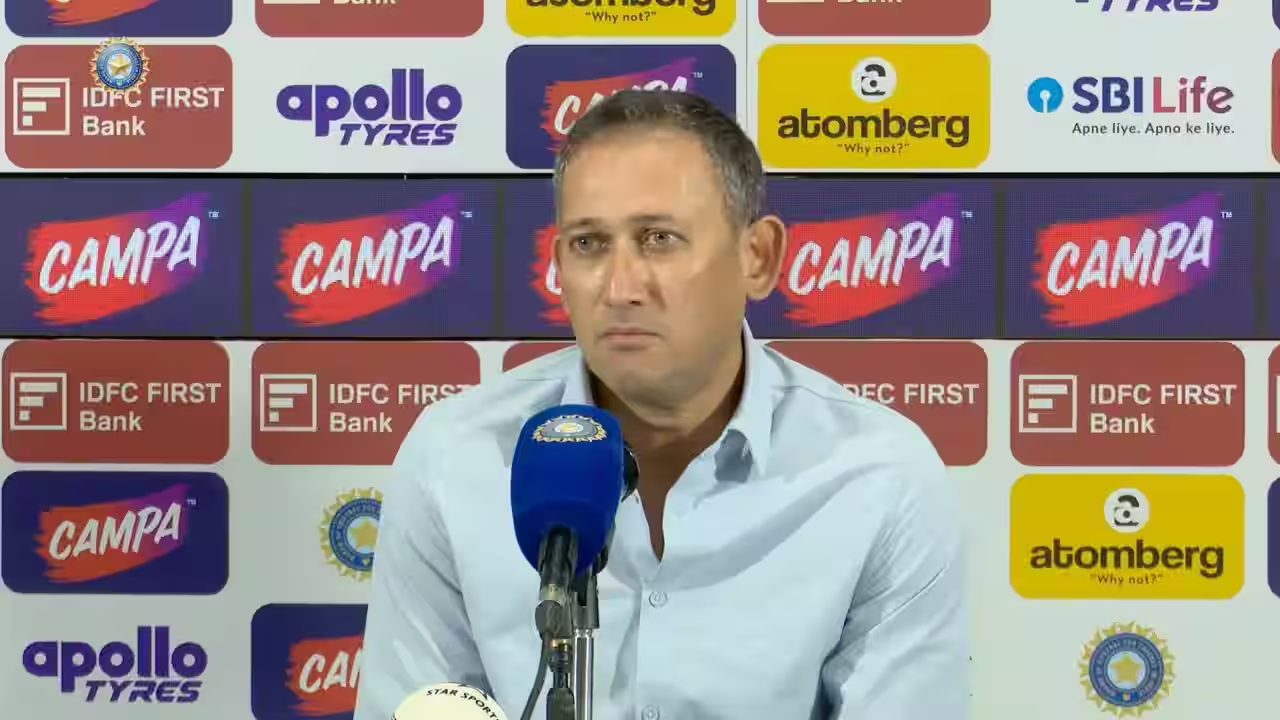
It had a certain inevitability about it, the feeling of inevitability that you get in a press room before an announcement is expected. It appears that India is not yet prepared to start a new chapter in terms of its selection.
The discussion has gradually gained momentum through the ranks of the Board of Control in Cricket in India, and not of change, but of maintaining the status quo. As the term of Ajit Agarkar approaches its expiry, the atmosphere is inclined towards continuity. And frankly, it does not seem like a surprise going by the way the past year has worked out.
A noticeable change was evident since Agarkar assumed the position. Not loud, not dramatic – but firm. You might feel it in team sheets, in post-match dealings, even in the body language of young players who found themselves suddenly endowed with responsibility. India was not merely playing matches, they were transforming themselves. There was a shift in progress and yet, it did not fall as low as many were worried.
That was particularly true of white-ball cricket. Major tournaments were rising and falling with India appearing confident, even domineering. Nightly the dressing room could be settled almost quiet, nearly in a tight finish. That does not occur accidentally. Clarity of selection is a factor and the panel of Agarkar appeared to be on track most of the time.
The calls, though, that could have been either way were the most notable. Leadership tweaks. Supporting new faces in times of crisis. Redoing combinations where it would have been simpler to work with familiar. These weren’t safe decisions. And yet they were a bigger thought, not only of the present day, but of the future. You had almost the sense that long-term map was being tracked, bit by bit.
Naturally, it has not been smooth sailing all the way. Transitions rarely are. The departure of the experienced individuals created vacancies not only in abilities, but also in presence. Test cricket, especially, has not been spared of its dark times. Similar situations overseas, challenging floors back at home. there have been times when there was a lack of clinging. The slight hesitation was to be felt even in the press box, the adjustment of the proper proportion still in progress.
But still, the big picture remains constant. India is not scrambling, they are evolving. That difference matters.
There are also the time bombs of the next major event, the 2027 ODI World Cup. It is already planned and is there in the distance. Squad building, role clarity, workload management. these do not turn back overnight. It would be a change in the composition of the selection committee at this point in time that would entail rethinking processes already underway. By the appearance of it, the board is not on that disruption.
The reasons why continuity is the call of the day.
Retaining Agarkar would be a strong signal: the right direction is being taken and there is confidence in the process. It is not so much about rewarding what has been done before but it is to safeguard the future. The consistency of thought that continuity in selection can introduce may often be trouble in a modern game where formats may overlap, and schedules may be too gasping to plan.
It has an anthropological aspect as well. Players become accustomed to some way of communication, some degree of clarity in expectations. Alter it too frequently, and it betrays itself, here and there. And currently, India appear to have struck a beat in that area.
The official word is yet to be received. But with a closer listen, to the discussions, the tone, the absence of urgency to change, it seems a move already in one direction.
And somewhere in all this, the concept is very basic, when something is working, particularly in a rebuild, you do not hurry to fix it.