


A new discussion is heating up around the FIFA World Cup 2026 before it gets into the swing of things. This time around, it’s not about tactics, favourites or star players. It’s a discussion about the heat, weather and conditions teams could encounter over the next few weeks.
The conversation has turned tough to put aside around the stadiums, especially in Mexico. The sun has been unrelenting in the daytime training and there’s increasing concern about what will happen when temperatures continue to rise and players, officials and supporters cope. It feels like someone is watching you with concern in the midst of World Cup excitement. Visitors are coming with flags and jerseys, but bringing water and shade are just as critical.
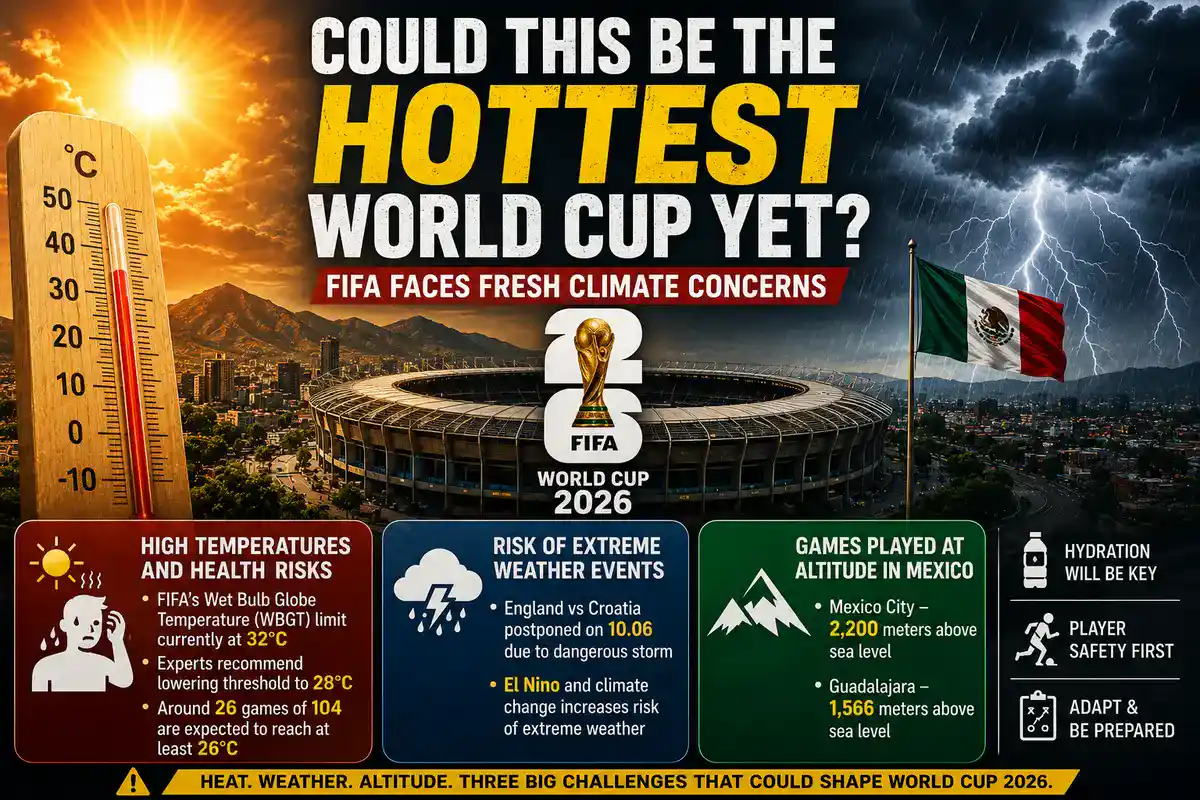
A big concern leading up to the tournament will be the Wet Bulb Globe Temperature (WBGT), which is a heat stress measurement. The current FIFA WBGT limit is 32 degrees Celsius. But some experts have suggested reducing this temperature to 28 degrees Celsius to better safeguard players and spectators. The discussion has been heightened as predictions indicate up to 26 of the tournament’s 104 games will be played at a temperature of 26°C or more.
It’s not just about heat. Extreme weather has also been in the mix. Widely reported in the lead up to the tournament, a proposed England vs Croatia clash on 10th June was cancelled due to an “extremely dangerous storm”. The incident comes at a time when climate researchers have been warning about El Niño patterns and the overall climate change trend, which could make extreme weather events more probable. If the weather changes rapidly organisers are likely to know that flexibility may be required.
There’s the altitude problem, especially for teams playing in Mexico. Mexico City is around 2,200 metres above the sea level, and Guadalajara is around 1,566 metres above the sea level. To those that aren’t used to looking at these numbers, it may not mean much, but to players it’s a reflection of how altitude can impact your breathing, recovery and overall performance. Even seasoned athletes can take additional time to acclimate themselves to these training sessions. The ball can move differently, recovery time becomes a bigger factor and coaches have to give careful consideration to squad rotation.
The interesting thing about it is that all three of the factors – heat, extreme weather and altitude – could affect matches at various stages of the competition. On one day, a team can be dealing with hot temperatures, and a few days later be in completely different environmental conditions. That uncertainty is a part of the tournament narrative well before many teams have hit their stride in their campaigns.
Why these conditions could matter
A small margin can make all the difference in football tournaments. In the middle of a match, due to fatigue, slow recovery or a sudden change in weather, a match can go in a different direction. That’s why the medical professionals and climate scientists have been closely watching conditions ahead of the World Cup.
The requirement for players doesn’t stop at tactics and fitness drills; it’s about preparing them as well. Formations and set-pieces routines may be as essential as hydration plans and recovery strategies or acclimatization protocols. Coaches may want to make earlier substitutions than usual, and organisers might be discouraged from ruling on the players’ welfare if temperatures rise beyond normal expectations.
Of course the biggie will still be the football. But as the FIFA World Cup 2026 kicks off, a key aspect of the tournament could be the atmosphere of the games themselves. The press areas to the fan zones feel like nature itself could be at work in shaping the competition.
FIFA World Cup 2026 is dealing with the rising threat of heat and extreme weather conditions, altitude, and experts are warning of possible risks for players and teams.